How does playing guitars refresh your mind?

There is no doubt that playing an acoustic guitar or electric is good for your mind and overall development. Many guitar players will tell you the feel refreshed, happy, calm and creative because of the therapeutic effects of playing. From the first lesson the experience of learning to play an acoustic guitar is a gift you will never lose.

  • Playing guitar’s  a type of therapy

Today playing the acoustic guitar is often being used by schools, health organisations and centers as a way to help people deal with stress, enhance memory as well as to improve motor and memory skills. It’s now recognised as a legitimate way to overcome depression and provides a way for many people to feel more at ease and cope with life

  • Lowers blood pressure and is good for the heart

Researches in the Netherlands found that people who practice playing guitar for 100 minutes or more per day have a significant drop in their blood pressure and heart rate. The is thought to be because of the relaxing and soothing feeling it provides the player

  • Creativity enhancement

Playing the acoustic guitar helps to develop and unleash your creativity and spills over to other areas of your life. If you need to find inspiration for school projects or new ideas in your job noodling around on the guitar helps create space in your mind and allows ideas to formulate

  • Future proof your brain

Brain decline in later life is a common problem, playing the guitar or other creative instruments can increase your grey matter and actually strengthens the connections between different parts of the brain helping to protect you from age related mental decline. It also reduces stress levels as it helps with your overall coordination, memory and concentration

  • Strengthens your social and support networks

Being around like minded people has been shown to be a very positive boot to a person’s mental health and playing music together is a great example of this. You also develop a great social network and find compatible friends

  • A great way to express your feelings

It’s often difficult to verbally express your emotions and the way you feel, but music is the perfect way to show self-expression and letting out your feeling in a socially acceptable way and express yourself to others

  • A confidence booster

There can be no doubt that learning to play the guitar is a huge confidence booster for most people. As you learn to play you will naturally find a audience which is a wonderful way to share and enjoy your creativity. It has the advantage of teaching you other skills such as presentation and public speaking while giving a sense of increased personal satisfaction and positive feeling about yourself. These go a long way in improving your mental health.

Learning to play the acoustic guitar can help you feel you fit in and are not alone. It stimulates the brain and imagination while bringing pleasure to not only yourself, but your friends and family. Music’s the universal language that aids in emotional communication and self-development. Many educational and mental health centers now use acoustic guitar playing to help people build confidence, deal with stress, enhance memory improve motor and memory skills as well as to combat aging.
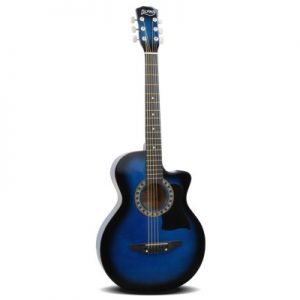
5 Things That Will Improve Your Guitar Playing

Playing a guitar is an art form and like all the arts, the thing that makes an individual artist stand-out, be unique and interesting is their individual style and technique. Whether you play an acoustic guitar or electric guitar it involves practice and dedication. By making clever and efficient use of your practice time you can get better value from the time spent.

These five things will help you improve your guitar playing:

  1. Dedicate Your Practice Time and Practice Hard

When you’re serious about trying to improve your guitar playing you need to dedicate some time when you can really focus on your playing and improvement. When you reach the stage you can easily play a scale or song with ease and don’t really need to think about it, then it’s time to move on and do another scale or song.

Even if you only practice for 15minutes a day, working hard at it and concentrating provides more benefits than hours of mindless repetition. If it’s not hard there’s little benefit.

The advantage of practicing every day is brain muscle coordination; with enough mindful practice your fingers will follow your thoughts without the need to consciously move them, muscle memory

  1. Always Perfect Something

During every practice session, you should perfect some aspect of your playing, such as difficult chord progression’s, new scales, solo or new picking styles. Practice it a bit, then practice something else for a break, but keep returning to it, to master a particular aspect

  1. Don’t Get Stuck in a Practice Rut

Many guitar players get stuck practicing a particular aspect. It’s important to perfect things, but you also need variety and contrast. Don’t always play the same songs, pick up new different tunes from out of your comfort zone so you become more versatile

  1. Scales Are Every Player’s Thing and So Are Chord Changes

Many acoustic and electric guitar players don’t like scales, but they help to improve your fretting hand’s dexterity and give you a greater chord range.

You need to practice matching your strumming hand coordination with your chord changes so they’re smooth and in time.

Use a metronome or drum beat when practicing to set your internal rhythm clock, this helps when slinging it together and working with others

  1. Be Open To Change

Try and practice with different guitars as each guitar has its own quirk’s and you may find other guitars handle quite differently. Try having a practice session’s playing an acoustic guitar if you normally play an electric or vice-versa, so you become a good all round player. You never know when you might want to play, but don’t have your guitar with you.

It’s also a good idea to change body positions you use when practicing. This will allow you to easily adapt so that you can easily play sitting, standing or walking as playing the guitar is very social.

To improve your acoustic or electric guitar playing you need to take the time each day to practice mindfully and try to perfect an aspect of your playing each session, but always remember playing the guitar is meant to be pleasurable, not a chore and a bore, so find things of interest to base you practices on.

Five Tips to Consider While Teaching Kids The Guitar

A kids guitar learning experience should be a happy and fun experience. One of the most important qualities in a music teacher is their ability to inspire interest and passion in their students. Without that, kids guitar lessons are likely to become a chore and a bore with many student’s either giving up or hating it. Read more

Top Things To Consider While Purchasing Ukelele For Beginners

A ukulele is a great first instrument for beginners and it’s relatively easy to find a ukulele for sale in most music shops or online. There’s a whole range of different sizes and style as well as brands available, but it’s important to think a little about which is the best one for beginners as picking the wrong one, a uke that’s hard to play or doesn’t sound right is sure to discourage them and even put them off playing.

It’s most likely there is a ukulele club somewhere near you, so it’s worthwhile visiting them and talking before you buy. That way you can try different sizes and makes until you find the one that suits you the best. They are quite likely to have one you can borrow for a short while and may even help you chose the right one to buy, when you go shopping for one.

Consider these things first:

  • How Much to Spend

As with most things, you get what you pay for and a really cheap ukulele may not sound very nice, may be hard to play and will probably not stay tuned for long. This is sure to discourage anyone so spend as much as you can afford within reason. A starter ukulele should be for sale around $50 to $65 and a good one about $100 to $120 and up

  • What Size Should You Get

This depends on what feels comfortable for you. Many people like to start with a soprano ukulele; it’s perfect for most sized hands and easy to play chords with as it has smaller frets

  • Type of Ukulele

The different types of ukulele for sale include mini ukuleles which tend to be harder to play.

A soprano type, which is the most common type of ukulele and often the best for a new player’s first instrument.

The tenor which is a good option for people who already play the guitar and the baritone, which is more like a guitar and doesn’t provide a true ukulele sound.

There are many extras available on today’s ukuleles, most of which should be avoided for beginner players as they only serve as a distraction and can be frustrating when you’re first starting to learn

  • Friction Tuners

These on cheaper ukuleles are better avoided as they hard to tune and don’t keep their tune well. On the more expensive models they can be an advantage to experienced players, but geared tuning pegs that stick out the sides rather than the back of the stock are much easier for new players

  • Different Shapes

New shapes such as the V shaped ukulele are much harder to play and do not give a good ukulele sound

  • Six and Eight Strings

Some ukuleles have 6 or 8 strings and although they provide a richer sound, they are more challenging to play and the extra string makes them more prone to breakages

When looking for a ukulele for sale to give to beginners, it’s advisable to try a selection first to find the best type available that suits them as the wrong style or size can be difficult to play and cause them to lose interest quickly. Often a soprano type is the best for beginners.

Mistakes to Avoid While Buying Guitar for Beginners

Purchasing your first guitar is an exciting time for new players and it’s important that you get a model and size that’s right for you. This is because having the right guitar makes playing so much easier and more enjoyable than having one that does not suit you. If you enjoy playing and practicing you are much more likely to continue playing. Studies suggest that those who continue playing for over six months are very likely to continue learning and playing making it a life long pleasure.

You need a good quality instrument, but this does not mean it needs to be expensive. A guitar with lots of extra features and a leading brand name will not improve your playing. High level guitars are designed for high level players who have reached a level after a few years of playing where they have developed their own style and require a guitar that’s appropriate to achieve their desired sound. Read more

Precaution to take while teaching guitar to kids

You are lucky enough to have kids that want to learn to play the guitar, it’s important that you give them all the encouragement possible as this will be something that will enrich their whole life. Start them off properly by investing in a proper kid’s guitar and finding the right teacher who will motivate and encourage them. Their lessons need to be a mixture of fun, pleasure and learning to ensure they get the correct techniques as well as enough enjoyment to keep on learning.

These are some precaution to take while teaching guitar to kids:

Get Them the Right Style Of Guitar

It’s important that kids are learning on a guitar that sounds good to them. They are unlikely to want to practice on an acoustic guitar if all they like is heavy metal, punk or fusion music. Likewise they will not love an electric guitar if they want to play folk or classical.

Get the Right Size and Weight of Guitar

Guitars come in a huge assortment of shapes and sizes as well as weights and there is a reason for this and that is people also do. Matching your kid to the right guitar is very important for their enjoyment, especially when first starting out.

A large, heavy guitar on a small person can be very uncomfortable and cause their neck, back and hands to ache so you cannot expect them to enjoy playing for long.

Not everyone has the budget to buy an expensive guitar, but consideration needs to be given to finding a suitable first guitar, even borrowing one that’s the correct size initially is a good solution then purchasing one as the child shows they are very keen to learn and play.

Chords

Often the small hands of children find it difficult to play cords so having a teacher who is prepared to make adjustments and accommodate them by changing the cords a little so they are easier to play but still sound like a real guitar can make a huge difference

Melody and Riffs

Children need to be motivated and one of the best ways to motivate them is to give them the things they want. When teaching, it’s best to start with easy short melodies that are familiar to them, from songs they love to hear and maybe sing along with.

By practicing simple melody lines, but using only one string to start with can help with a child’s dexterity in their playing. Then add the other strings as they get used to playing.

Patience

It’s important to be patient with kids when they first start out as it can take a little for them to start to get the hang of playing. Just take it a step at a time and allow them to learn at their own pace, they will soon get the hang of it and want to push their boundaries as long as they are enjoying and having fun playing.

Keep them Interested

Playing different music regularly in the home can inspire and keep them interested in playing

The biggest precaution when teaching guitar to kids is to stop them losing interest because it’s not enjoyable or fun and make sure they have kids guitar to play

How acoustic guitars are different from other guitars?

The guitar is one of the most popular instruments played around the world. There are several reasons for this including the fact that’s it’s relatively easy to learn a few simple melodies on one. The huge variety of different styles of music that can be played and the fact they are easily transported.

The most popular type of guitar is the acoustic guitar, these are different from other guitars such as an electric guitar because:

Acoustic Guitar

  • The acoustic guitar uses its design to amplify the sound
  • They have large hollow bodies, use a sound hole situated just below the strings and a sound board that’s made of thin wood placed on the front of the guitar
  • When the guitar is played, the vibrations from the strings as they are strummed are picked up by the bridge and saddle and transmitted to the soundboard.

This causes the energy from the strings to move to the air inside the guitar, which is then naturally amplified because of the guitars shape and design.

The sound is then projected through the sound hole from inside the guitar.

The volume is directly related to how hard the guitar is played

Electric Guitar

Electric guitars instead of relying on the body of the guitar to produce the sounds, use transducers or electrical pickups to convert the string’s vibrations into an electrical signal that is the amplified so you can hear it.

  • When an electric guitar is turned off while being strummed there is very little sound produced
  • Electric guitars do not have a sound board and are not hollow
  • Normally an electric guitar is smaller and heavier than an acoustic guitar because of the electrical components

Electric Acoustic Guitar

An electric acoustic guitar is an acoustic guitar that has an electrical pickup attached to help amplify the sound and produces its own particular sound through the uses of electronics

Classical Guitar

There are also different types of acoustic guitars such as classical guitars and 12 string guitars

The differences are:

  • The Fretboard

On a classical guitar these are wider and usually do not have the same markings

  • The Shape

Normally an acoustic guitar has a larger body and more of a dreadnought shape.

Classical guitars tend not to have the same cutaways to provide for higher frets

Price

Classical guitars tend to be cheaper than acoustic guitars which make them popular for beginners

  • Strings

An acoustic guitar uses steal strings while a classical guitar has nylon strings, this produces very different sounds. As you would expect a 12 string guitar has an additional 6 strings to produce its own unique sound

  • Sound

A steel string guitar produces a bright twangy sound that normally lasts longer (resonates) than would happen with a classical guitar

The difference in the size and shape as well as they type of strings plays a large part in the sound differences between classical and steel stringed acoustic guitars.

The type of sound you wish to make is the main factor when choosing which type of guitar is best for you. Normally beginners tend to choose a classical guitar and then move on to an acoustic guitar or electric once they have mastered the basics.

Things To Check While Purchasing A New Electric Guitar

When shopping for an electric guitar you will quickly discover they come in a huge assortment of sizes, weights and styles to please and suit everyone. The trick is matching the right guitar to the player.

This guide will help you choose the best new electric guitar to purchase:

Who is the guitar for?

A guitar for a beginner is usually very different from the type required by an experienced player

  • Check that the guitar matches the person’s size and that it “feels” comfortable to them
  • Check to see that the string action is set to match the player. Ask your music shop to set it up properly, they have a lot experience is doing this and a properly set up string action will make playing easier and less frustrating for a beginner
  •  Check to ensure that the neck of the guitar is straight and not warped or bent
  • Make a quick check of the intonation by playing a 12trh fret harmonic followed by a 12th fret note to see if the pitch is the same or does it need to be altered
  • Try the volume and tone controls to ensure they are easy to work. Check the pickup selector and any other control to ensure they operate smoothly, sound clean and are not too crackly or hissy
  • It’s easy to tune and will it stay in tune
  • What type of accessories does it come with
  • Can it be used with a small solid state amp

Playing a guitar that is not set up correctly can be annoying and cause the student to become frustrated and lose interest quickly.

When a guitar that has been specially set up, taking into account a person’s hand size and movement, it makes the difference between the experience being a pleasurable exercise or a frustrating and difficult experience.

Often a student knows the sounds and the type of guitar they want to play, it’s worth trying to match these ideas up with a guitar that they want to keep them motivated an interested

Lower Price Range

There are many good options in the lower price range of electric guitars and until a person has decided that they wish to continue playing (this usually happens after 6 months) it can be hard to justify buying a guitar with a large price tag.

For people who have been playing for a while they usually know what they want and so it’s much easier to find what they want. With guitars often price equates to overall quality, often it is worthwhile paying a little more to get the best possible guitar and avoid the urge to constantly upgrade.

When you’re viewing an electric guitar it is very likely to have reviews from other players who have tried it so it’s worthwhile reading these to get a bit of an idea how it performs and if there are any issues with it that you need to be aware of before you purchase it.

When you’re buying an electric guitar it pays to take your time and make the right selection based on finding one that feels comfortable for you and is in your price bracket. Have the shop set it up properly for you and check the controls.

Design a site like this with WordPress.com
Get started